• Instagram
  • Facebook
  • Twitter

Walla, Walla, WA | 509-529-7537

Wusthof Knives: How to Choose the Right One for Your Kitchen

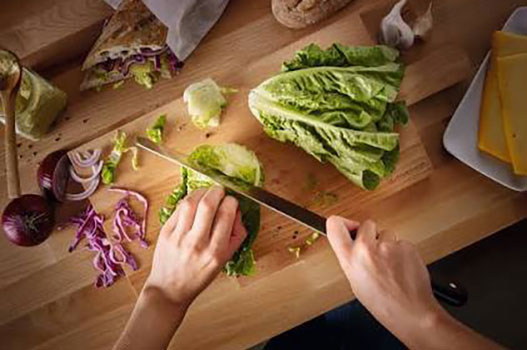
Overhead view of hands slicing romaine lettuce on a wooden cutting board with fresh vegetables nearby

Most people own at least one knife they don’t really like. It came in a set, or it was a gift, or it seemed fine at the store. It does the job well enough, until you use a good set of Wusthof knives and realize what you’ve been missing.

A well-made knife changes the way cooking feels. Prep goes faster. Cuts are cleaner. The whole experience is less effortful, which sounds minor until you’re breaking down a chicken or slicing through a dense winter squash and the knife moves through it like it was designed to.

Wusthof has been making knives in Solingen, Germany since 1814. That’s not marketing copy — it’s a meaningful fact. Solingen has been a center of blade manufacturing for centuries, and Wusthof has spent two hundred years refining what a kitchen knife should be. They’re still family-owned, still making knives in the same city, and the quality has a consistency to it that’s hard to fake over that kind of timeline.

Here’s what’s worth knowing before you buy. You can shop our products online or visit us in store to see our Wusthof collection.

Wusthof Knives: Forged vs. Stamped

The most important distinction in Wusthof’s lineup is between forged and stamped knives.

Forged knives are made from a single piece of steel that’s heated and shaped under pressure. The process creates a denser, more durable blade with a full bolster — that thick band of steel between the blade and the handle — which adds balance and protects your fingers. Wusthof’s Classic and Classic Ikon lines are forged.

Stamped knives are cut from a flat sheet of steel and then ground and heat-treated. They’re lighter, more flexible, and less expensive. Wusthof’s Gourmet line is stamped. These are excellent knives, especially for someone building a first serious kitchen kit without wanting to spend a lot all at once.

Neither is objectively better. They suit different preferences. If you like a heavier knife with more heft behind each cut, go forged. If you prefer something lighter and more maneuverable, stamped makes sense.

The Wusthof Knives That Actually Matter

You don’t need a full block. Most home cooks get by beautifully with three knives, and some manage with two. Here’s what’s worth prioritizing.

A chef’s knife is the workhorse. Eight inches is the most versatile length for most people — long enough to handle large vegetables and proteins, short enough to stay controlled. If you only buy one good knife, this is the one. It handles probably eighty percent of what happens in a kitchen.

A paring knife handles the smaller, more precise work — peeling, trimming, hulling strawberries, anything where a chef’s knife would be unwieldy. A three or four inch blade is standard. It’s inexpensive relative to the rest of the lineup and worth having a good one.

A serrated bread knife is the third piece that completes the set. It handles bread without crushing it, and it’s also the right tool for tomatoes, citrus, and anything with a tough skin and soft interior. Unlike the chef’s knife and paring knife, a serrated knife doesn’t require sharpening in the traditional sense, so it’s genuinely low maintenance.

If you want to add a fourth, a boning knife is useful for anyone who breaks down meat or fish regularly. The narrow, flexible blade gets into places a chef’s knife can’t reach cleanly.

What to Look for in the Store

Balance matters more than most people realize. Pick the knife up and hold it the way you’d actually use it — pinch grip, with your thumb and forefinger on either side of the blade just above the handle. It should feel stable and natural, not tip-heavy or handle-heavy. A well-balanced knife reduces fatigue over longer prep sessions.

The handle should feel comfortable in your hand. Wusthof’s Classic line has a traditional triple-riveted handle that’s been the same for decades — most people find it immediately familiar. The Classic Ikon has a more contoured handle that fits a wider range of hand shapes. If you have the chance to hold both, it’s worth the comparison.

Edge retention is where Wusthof knives earn their reputation. The blades are precision-honed to a 14-degree angle per side using a proprietary process, which produces an edge that’s sharper out of the box than most competitors and holds that edge through regular use. With proper care — hand washing, a wooden cutting board, occasional honing with a steel — a Wusthof knife lasts decades.

Caring for What You Buy

A sharp knife is a safer knife. This sounds counterintuitive but it’s true — a dull blade requires more force, which means less control. A honing steel realigns the edge bet
What Is True Balsamic Vinegar — and Why Does It Matter?

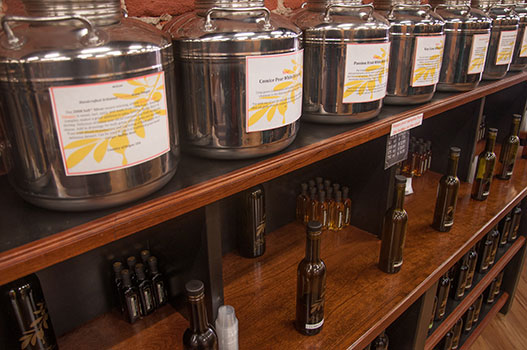
Stainless steel balsamic vinegar tasting containers and bottled olive oils displayed on wooden shelves at D'Olivo Tasting Bar in Walla Walla

Walk into any grocery store and you’ll find a dozen bottles labeled “balsamic vinegar.” Some cost three dollars. Some cost thirty. They look similar enough on the shelf, and if you’ve only ever used the inexpensive kind, you might reasonably wonder what the fuss is about.

The fuss is legitimate. What most people know as balsamic vinegar and what true balsamic vinegar actually is are two pretty different things — and understanding the difference changes the way you cook with it.

Where It Comes From

Real balsamic vinegar comes from one place: the Emilia-Romagna region of Italy, specifically the provinces of Modena and Reggio Emilia. It’s been made there for over a thousand years. The name itself — aceto balsamico — comes from the Italian word for balm, which tells you something about how it was originally regarded. This wasn’t a condiment. It was a luxury, given as gifts, passed down through families, used sparingly and with intention.

The production method hasn’t changed much. It starts with freshly pressed grape must — the whole crushed grape, juice and all — which is cooked down slowly over an open flame until it reduces significantly. What you’re left with is thick, sweet, and deeply concentrated. That’s the starting point, not the finished product.

The Barrels

What happens next is what separates traditional balsamic from everything else. The cooked must is transferred into a series of wooden barrels, each made from a different wood — oak, chestnut, cherry, juniper, and mulberry are common. The vinegar spends years moving through this sequence, a small amount transferred from one barrel to the next as it evaporates and concentrates further.

The minimum aging time for traditionally produced balsamic is twelve years. Some is aged for twenty-five years or more. During that time, it absorbs character from each wood, developing a complexity that no shortcut can replicate.

When it’s ready, it’s thick enough to coat a spoon. Sweet, but with real acidity underneath. Layered in a way that’s hard to describe but immediately recognizable when you taste it.

What’s in Most Bottles

Commercial balsamic vinegar — the kind that dominates most grocery store shelves — is made differently. Wine vinegar is the base, with grape must added for color and sweetness, sometimes thickened with caramel or gum. It can be produced in a matter of weeks. It’s not a bad product for what it is, but it’s a fundamentally different thing from traditionally aged balsamic, which is why the price gap exists.

The European Union recognizes this distinction formally. Aceto Balsamico Tradizionale di Modena and Aceto Balsamico Tradizionale di Reggio Emilia carry protected designation of origin status — the same kind of certification that governs Champagne or Parmigiano-Reggiano. Producers must follow strict standards and submit their vinegar for tasting panels before it can be bottled and sold under that designation.

There’s also a middle category — Balsamic Vinegar of Modena IGP — which uses some aged vinegar blended with wine vinegar and must. These can be quite good, especially when they indicate a longer aging period on the label. The quality varies considerably, and the label is worth reading.

How to Use It

Traditional aged balsamic isn’t meant to be cooked. The heat dulls the complexity you’re paying for. It’s a finishing ingredient — a few drops over a finished dish right before it hits the table.

A good aged balsamic over fresh strawberries is one of the simplest and best things you can eat. Same over a piece of Parmigiano-Reggiano, or on roasted vegetables just off the sheet pan, or drizzled across a bowl of vanilla ice cream. It also does something remarkable with grilled meat — the sweetness and acidity cut through fat in a way that makes the whole dish taste more alive.

The younger, thinner styles are better suited to dressings and marinades, where they get a chance to meld with other ingredients. A basic vinaigrette — good olive oil, balsamic, a little dijon, salt — is one of those recipes you make once and never go back to bottled dressing again.

The Tasting Part

If you’ve never tasted a traditionally aged balsamic on its own, it’s worth doing. Pour a small amount into a spoon and taste it straight. The sweetness hits first, then something more complex — fruit, wood, a gentle acidity that lingers without being sharp. It doesn’t taste like vinegar the way you might expect. It tastes like something that took a long time to become what it is.

That’s the whole story, really. Great balsamic is the product of time, patience, and a process that resists shortcuts. Once you understand that, the bottle at the back of your pantry — the one you reach for without thinking — starts to look a little different.

Bread and Beyond: Creative Uses for Sourdough Starter

Here’s what nobody tells you when you start a sourdough starter: the bread is almost beside the point.

Yes, a good sourdough loaf is worth the effort. That crackling crust, the open crumb, the tang that commercial bread can’t replicate. But once you’ve got an active starter going, you’ll realize pretty quickly that you’re producing more of this stuff than any reasonable bread-baking schedule can handle. You feed it, it grows, you use some, you feed it again. The math doesn’t work unless you’re baking every single day or throwing half of it away each time.

The discard problem is real. And the solution isn’t to toss it—it’s to start thinking of your sourdough starter as an ingredient, not just a bread-making tool.

The Breakfast Situation

Sourdough pancakes might be the best argument for keeping a starter alive. The discard you’d normally throw out makes pancakes that are lighter, tangier, and more interesting than anything from a box mix. The fermentation does some of the work overnight, developing flavor and air bubbles while you sleep.

Overnight Sourdough Pancakes

(Makes about 12 pancakes)

The night before:

1 cup sourdough discard
1 cup all-purpose flour
1 cup milk
1 tablespoon sugar

Whisk everything together in a large bowl. Cover loosely and leave on the counter overnight (8-12 hours). In the morning, add:

1 egg
2 tablespoons melted butter
½ teaspoon salt
1 teaspoon baking soda

Stir until just combined—don’t overmix. The batter will be bubbly and slightly thick. Cook on a buttered griddle over medium heat until bubbles form on the surface and the edges look set, then flip. Serve immediately.
The baking soda reacts with the acidic starter, which is what gives these pancakes their lift. Don’t let the batter sit too long after adding it or you’ll lose some of that rise.

The same approach works for waffles—just increase the butter to 4 tablespoons for crispier edges.

Beyond Breakfast

Pizza dough is where sourdough starter really shines. The long, slow fermentation develops flavor that quick-rise doughs can’t match.

Sourdough Pizza Dough

. (Makes two 12-inch pizzas)

100g active sourdough starter (fed within the last 4-12 hours)
325g water, room temperature
500g bread flour (all-purpose works, but bread flour gives better chew)
10g salt
1g instant yeast (optional, but adds insurance)

Combine starter and water, stirring to dissolve. Add flour and mix until no dry spots remain. Let rest 30 minutes. Add salt (and yeast if using), then knead or fold until smooth, about 5-7 minutes by hand.

Divide into two balls. Place in lightly oiled containers and refrigerate for 24-72 hours. The longer it sits, the more flavor develops.

To bake: Remove from fridge 2 hours before you want to make pizza. Preheat your oven as hot as it goes (500-550°F) with a baking stone or inverted sheet pan inside. Stretch the dough gently—don’t use a rolling pin—and top sparingly. Bake until the crust is blistered and the cheese is bubbling, about 7-10 minutes depending on your oven.

Sourdough Discard Flatbread

(Makes 4 flatbreads)

This one comes together fast and works alongside almost any meal.

1 cup sourdough discard
½ cup plain yogurt (full-fat works best)
1 teaspoon baking powder
½ teaspoon salt
1 cup all-purpose flour, plus more for dusting

Mix discard, yogurt, baking powder, and salt. Add flour and stir until a shaggy dough forms. Turn out onto a floured surface and knead briefly—just until it comes together, about 1 minute.

Divide into 4 pieces. Roll each piece thin, about ⅛ inch. Cook in a dry cast iron skillet over medium-high heat until charred spots appear, about 2 minutes per side. Brush with melted butter or olive oil while warm.

These are best fresh but will keep wrapped in a towel for a few hours.

The Sleeper Hit: Sourdough Crackers

Thin, crispy, and completely customizable. They keep for a week and make you look like you have your life together.
Everything Sourdough Crackers

1 cup sourdough discard
2 tablespoons olive oil
½ teaspoon salt
2 tablespoons everything bagel seasoning (or make your own: sesame seeds, poppy seeds, dried garlic, dried onion, flaky salt)

Preheat oven to 350°F. Line a baking sheet with parchment.

Mix discard, olive oil, and salt until smooth. Spread very thin on the parchment—use an offset spatula or the back of a spoon. You want it nearly translucent in spots. Sprinkle seasoning evenly over the top and press gently so it adheres.

Bake 25-35 minutes, rotating halfway, until golden and crisp throughout. The edges will darken first; that’s fine. Let cool completely on the pan—they crisp up more as they cool.

Break into irregular shards. Store in an airtight container.

Variations: rosemary and flaky salt, cracked black pepper and parmesan, or za’atar with a drizzle of good olive oil after baking.

The Sweet Side

Sourdough’s tang plays well with sugar. It adds depth the way a pinch of salt does in baking—not something you taste directly, but something you’d miss if it weren’t there.

Sourdough Cinnamon Rolls

(Makes 12 rolls)

For the dough:

100g active sourdough starter
180g whole milk, warmed slightly
50g sugar
1 egg
400g all-purpose flour
6g salt
85g softened butter

For the filling:

6 tablespoons softened butter
¾ cup brown sugar
2 tablespoons cinnamon

For the glaze:

4 oz cream cheese, softened
1 cup powdered sugar
2-3 tablespoons milk
½ teaspoon vanilla

Combine starter, milk, sugar, and egg. Add flour and salt, mix until a shaggy dough forms. Add softened butter a tablespoon at a time, kneading until fully incorporated and the dough is smooth and slightly tacky. This takes about 10 minutes by hand.
Cover and let rise at room temperature until doubled, 4-8 hours depending on your kitchen temperature. (Or refrigerate overnight and let it finish rising in the morning.)

Roll dough into a rectangle, roughly 18×12 inches. Spread with softened butter, then sprinkle evenly with brown sugar and cinnamon. Roll tightly from the long side. Cut into 12 pieces with a sharp knife or unflavored dental floss.
Place in a buttered 9×13 baking dish. Cover and let rise until puffy, another 1-2 hours.

Bake at 375°F for 25-30 minutes, until golden on top. While warm, spread with cream cheese glaze (just beat all glaze ingredients together until smooth).

These take time. They’re a weekend project. But the texture—soft, rich, with actual pull and chew instead of doughy sweetness—is worth the effort.

Keeping Your Starter Happy

All of this depends on having a healthy, active starter. And that’s where most people run into trouble.

Temperature matters more than most beginners realize. A starter kept at 70°F behaves differently than one at 78°F. Too cold and it’s sluggish, slow to rise, slow to develop flavor. Too warm and it peaks too fast, becomes overly acidic, and starts to smell like nail polish remover. The sweet spot is somewhere in the mid-70s, but finding that consistency in a normal kitchen—where temps swing with the seasons and the thermostat—is genuinely hard.

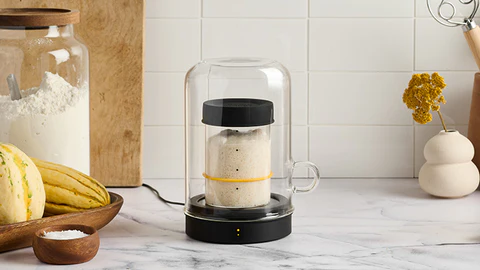
The Goldie by Sourhouse solves this problem simply. It’s a temperature-controlled container for your starter. Set your target temperature and it holds there, regardless of what’s happening in the rest of your kitchen. Winter, when your house drops to 65°F overnight? Your starter stays at 76°F. Summer heat wave? Same thing.

The result is a predictable starter. It rises on schedule. It peaks when you expect it to. You can actually plan to bake, rather than waiting to see if conditions align. If you’ve been fighting an inconsistent starter—or you’ve let one die because the maintenance felt like guesswork—The Goldie is worth a look.

The Bigger Picture

Keeping a sourdough starter is a small commitment that pays off in ways you don’t expect. Yes, you can make bread. But you can also make pancakes on a Tuesday, pizza on Friday, crackers for the weekend, and cinnamon rolls when you feel like impressing someone.

The discard isn’t waste—it’s possibility. Once you see it that way, the whole practice makes more sense.A healthy starter and a little creativity go a long way.

The Minimalist Kitchen: 10 Tools You Truly Need

Walk into any kitchen store (or scroll through any cooking blog), and you’ll be bombarded with gadgets promising to revolutionize your cooking life. Spiralizers, avocado slicers, egg separators, specialized pans for every occasion – the list is endless and overwhelming. But here’s the truth: great cooking doesn’t require a cluttered kitchen drawer full of single-use tools. It requires a carefully curated collection of quality pieces that can handle multiple tasks with excellence.

Whether you’re setting up your first kitchen, downsizing to a smaller space, or simply craving a more streamlined cooking experience, these ten essential tools will equip you to handle virtually any recipe that comes your way. The key is choosing quality over quantity – pieces that feel good in your hand, perform reliably, and last for years.

What’s On The List

1. One Excellent Chef’s Knife (8-inch)

If you could only own one kitchen tool, this would be it. A quality 8-inch chef’s knife – something like a Wusthof Classic – handles about 90% of your cutting tasks. It minces garlic, dices onions, breaks down a chicken, slices tomatoes, and chops herbs. Forget the knife block with twelve pieces you’ll never use. Invest in one stellar chef’s knife, learn to use it properly, and keep it sharp. Your cooking will improve immediately, and your drawer space will thank you.

2. A Paring Knife

While your chef’s knife is the workhorse, a 3-4 inch paring knife handles the delicate work. Hulling strawberries, deveining shrimp, peeling apples, or any task requiring precision and control – that’s where a paring knife shines. Choose one that feels comfortable in your hand since you’ll be using it for detailed, close work.

3. Cast Iron Skillet (10 or 12-inch)

This might be the most versatile piece in your kitchen. A well-seasoned cast iron skillet sears steaks beautifully, bakes cornbread, roasts vegetables, fries eggs, and goes from stovetop to oven without hesitation. It’s naturally non-stick when properly maintained, nearly indestructible, and actually improves with age. Whether you choose traditional bare cast iron or enameled, this is the pan that can do almost everything.

4. Dutch Oven (5-7 quart)

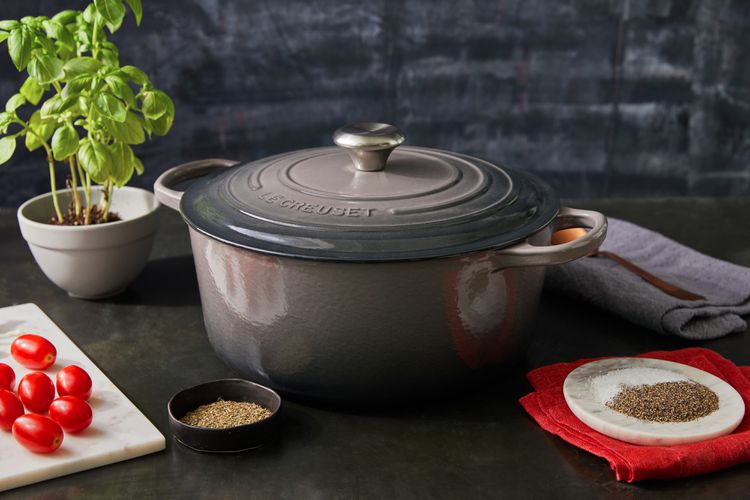
If the cast iron skillet handles quick cooking, the Dutch oven masters slow, patient preparations. Soups, stews, braises, bread baking, pasta dishes – a quality Dutch oven like Le Creuset handles them all. The heavy lid traps moisture for tender results, and the even heat distribution means nothing burns on the bottom. It’s equally at home on the stovetop or in the oven, and it’s beautiful enough to go straight to the table.

We recommend choosing from any of the Le Creuset cookware available. The quality and craftsmanship are unmatched.

5. Rimmed Baking Sheet

The humble sheet pan is criminally underrated. Yes, it bakes cookies, but it also roasts vegetables, bakes fish, toasts nuts, makes sheet pan dinners, and catches drips from pies in the oven. Choose a heavy-duty option like USA Pan – the rimmed edges contain juices and prevent warping, while the quality construction ensures even browning. If you had to pick just one size, go with a half-sheet (18×13 inches).

6. Wooden Cutting Board

You need a stable, spacious surface for all that chopping. A quality wooden cutting board is gentle on knife edges, naturally antimicrobial, and can be restored with mineral oil when it starts looking tired. Choose one large enough to give you working room – at least 12×18 inches. Bonus: it doubles as a serving board for cheese and charcuterie.

7. Wooden Spoon and Silicone Spatula

Technically two tools, but they work as a team. A wooden spoon is your go-to for stirring soups, sauces, and sautés – it won’t scratch your cookware or conduct heat up the handle. A heat-resistant silicone spatula scrapes bowls clean, folds delicate batters, and flips eggs without damaging non-stick surfaces. Between these two, you can handle virtually any stirring, scraping, or folding task.

8. Stainless Steel Saucepan (2-3 quart)

For boiling grains, heating sauces, making oatmeal, or warming soup, a medium saucepan with a lid is essential. Stainless steel is durable, non-reactive with acidic foods, and heats evenly. Choose one with a comfortable handle and a lid that fits securely.

9. Large Mixing Bowl

You need somewhere to toss salads, marinate meat, mix dough, and prep ingredients. A single large stainless steel or ceramic mixing bowl (at least 4-5 quarts) handles most tasks. Stainless steel is lightweight, durable, and can double as a double boiler when placed over simmering water.

10. Box Grater

Fresh-grated cheese tastes incomparably better than pre-shredded, and a box grater also handles zesting citrus, shredding vegetables, and grating ginger or garlic. Choose a sturdy four-sided grater that won’t tip over mid-use. This simple tool adds fresh flavor to countless dishes and takes up minimal space.

The Philosophy Behind Minimalism

Notice what’s not on this list: no electric gadgets, no single-use tools, no specialized pans. That’s intentional. These ten items work together to create a kitchen that’s efficient, uncluttered, and capable of producing restaurant-quality meals.
The minimalist approach isn’t about deprivation – it’s about intentionality. When you’re not digging through cluttered drawers looking for that one tool, cooking becomes more enjoyable. When every item in your kitchen is something you genuinely use and appreciate, you’re more likely to cook from scratch.

Quality Over Quantity

Here’s where the minimalist philosophy really pays dividends: because you’re buying fewer items, you can afford to invest in quality. That Wusthof knife will last decades with proper care. Your Le Creuset Dutch oven might outlive you. Quality tools perform better, feel better in your hands, and ultimately save money by not needing replacement.

Start with these ten essentials, use them regularly, and only add new tools when you’ve identified a genuine, repeated need that your current collection can’t address. You might be surprised to discover that the answer to better cooking isn’t more stuff – it’s better stuff, used skillfully.

Your minimalist kitchen isn’t about sacrifice. It’s about clarity, quality, and the freedom that comes from having exactly what you need and nothing you don’t.

How to Properly Season and Care for Your Le Creuset (or Cast Iron)

There’s something deeply satisfying about cooking in cast iron – that perfect sear on a steak, the even heat distribution for cornbread, the way these pieces seem to improve with age rather than wear out. Whether you’ve invested in the iconic enameled cast iron from Le Creuset or traditional bare cast iron skillets, understanding proper care ensures these kitchen workhorses will serve you (and possibly your grandchildren) for decades to come.

The good news? Despite their reputation for being high-maintenance, both enameled and traditional cast iron are remarkably forgiving once you understand a few key principles.

Understanding the Difference: Enameled vs. Bare Cast Iron

Before we dive into care instructions, it’s important to understand what you’re working with. Le Creuset and similar brands feature cast iron coated with a glass-based enamel, which means they don’t require the seasoning process that bare cast iron does. The enamel creates a non-reactive, naturally non-stick surface that won’t rust or impart metallic flavors to acidic foods like tomato sauce.

Traditional bare cast iron – your grandmother’s skillet or modern Lodge pieces – relies on seasoning (polymerized oil) to create its non-stick surface and prevent rust. Both types have their place in a well-equipped kitchen, and both require specific care to perform their best.

Caring for Enameled Cast Iron (Le Creuset, Staub, etc.)

First Use: When your beautiful Le Creuset Dutch oven arrives, wash it with warm soapy water, dry thoroughly, and you’re ready to cook. No seasoning required – the enamel surface is ready to go.

Daily Cleaning: Despite what you might have heard, you can absolutely use soap on enameled cast iron. In fact, you should. Wash with warm water and dish soap using a soft sponge or brush. For stuck-on food, let the piece soak with warm soapy water for 15-30 minutes, then use a nylon scrubber or Le Creuset’s own cleaning tool to gently remove residue.

Tackling Stains: That beautiful cream-colored interior will develop some staining over time – it’s normal and doesn’t affect performance. For stubborn stains, make a paste with baking soda and water, apply it to the stained areas, and let it sit for several hours or overnight. Gentle scrubbing should lift most discoloration. For really stubborn stains, a diluted bleach solution (one tablespoon bleach per pint of water) can be used occasionally.

Heat Management: While cast iron handles high heat beautifully, enameled pieces benefit from a more moderate approach. Use low to medium heat for most cooking – the excellent heat retention means you don’t need blasting temperatures. Always add fat or liquid to the pan before heating, and never heat an empty enameled pot.

Storage Tips: Stack carefully using pan protectors or kitchen towels between pieces to prevent the enamel from chipping. Store with lids slightly ajar to allow air circulation and prevent moisture buildup that can lead to musty odors.

Caring for Traditional Bare Cast Iron

Seasoning Your Pan: New cast iron often comes pre-seasoned, but building up additional layers improves performance. After washing and thoroughly drying your pan, apply a thin layer of vegetable oil, flaxseed oil, or shortening to the entire surface – inside, outside, and handle. Wipe away excess until the pan looks almost dry. Place it upside down in a 450°F oven for one hour, then let it cool completely. Repeat this process 3-4 times for new pans.

Daily Cleaning: The “never use soap” rule is actually a myth from when soaps contained lye that would strip seasoning. Modern dish soap is fine for regular cleaning. Wash your pan with hot water and a small amount of soap if needed, using a brush or non-abrasive scrubber. The key is immediate and thorough drying – water is cast iron’s enemy.

Maintenance Seasoning: After each use and cleaning, place the pan on the stove over low heat to evaporate any remaining moisture. While still warm, rub a very thin layer of oil over the entire surface. This ongoing maintenance builds that coveted non-stick patina over time.

Rescuing Rusty Cast Iron: Don’t panic if you discover rust. Scrub it away with steel wool, wash thoroughly, dry completely, and re-season following the process above. It’s nearly impossible to permanently ruin cast iron.

Universal Cast Iron Rules

Regardless of type, never subject cast iron to thermal shock – don’t run cold water over a hot pan or place a hot pan on a cold surface. The dramatic temperature change can cause cracking.

Avoid using metal utensils on enameled cast iron (they can chip the enamel), but they’re fine on bare cast iron. Wooden and silicone utensils work well for both.

Never put any cast iron in the dishwasher. The harsh detergents and prolonged water exposure will damage both enamel and seasoning.

The Reward for Proper Care

With proper maintenance, cast iron cookware genuinely improves with age. That Le Creuset Dutch oven will develop a beautiful patina and even better cooking performance. Your bare cast iron skillet will become increasingly non-stick and develop flavor complexity that no modern pan can replicate.

These pieces aren’t just cookware – they’re investments in better cooking and potential family heirlooms. A little care ensures they’ll be searing steaks and simmering stews for generations to come.

Annual Gift Giving Guide: 2023

It’s that time of year again, and as always, we’ve got a wonderful assortment of gift ideas for the foodie, chef, and baker in your life. Check out our list of must have items below and stop in to visit us at 10 E. Main Street for all your holiday needs.

1. The Goldie
Sour dough bread and sour dough recipes in general have taken the world by storm, and for good reason. Not only does the dough or item you create taste delicious, but it is also a great low-gluten option and some individuals with gluten sensitivities or intolerances can still eat sour dough.

Keep your sour dough starter at the perfect temperature with The Goldie by Sourhouse. According to their website, Goldie by Sourhouse™ provides just enough warmth to keep a sourdough starter consistently in the “Goldilocks Zone” of 75-82ºF (~24-28ºC) where it is the most active and healthy, so bakers can bake their best bread all year round without warming up their whole house.

2. Klean Kanteen

Take your adventures to a new level with this perfectly designed, vacuum insulated product. Drinks can stay cold up to 145 hours and hot for up to 47 hours. These are ideal for those who love to get outdoors, but can also make a great addition for someone who just wants to have their coffee stay hot all day long.

3. Le Creuset Bread Oven

The perfect complement to your purchase of The Goldie, is a Le Creuset bread oven. This item is sure to take your bread to the next level. Made from the same high-quality cast iron, this oven is designed to trap and circulate steam for a maximum rise and even browning of your bread. This should help ensure a perfect crust every time.

If you’re looking for a slightly more versatile option, then Le Creuset also has their entire line of dutch ovens which can also be used quite well to bake bread, cook your next family roast, or throw together a delicious soup or stew.

4. Gift Baskets

Not sure exactly what to get for your friends, family or coworker? Stop in and we’ll help you put together the perfect gift basket complete with items that are sure to elevate their next culinary adventure. Stop in and ask us about our options and you’ll leave the store with a complete gift ready to hand off to that special someone.

5. Olive Oil and Balsamic Vinegar Sample Packs

We know that choosing just one of our olive oils or balsamic vinegars is just about impossible. That’s why we offer our variety gift packs so you don’t have to limit yourself. Instead, choose from our preselected packs or customize your own. Each pack comes with six 60 ml bottles which will give newbies and olive oil experts both dozens of pairings to spice up their next dish.

6. Olive Oil Skin Care

This is the time of year when skin and hair can really begin to suffer from the wind and cold. We’ve got a great line of olive oil skin care products from Olive Oil Skincare Company of Australia. From shampoo to facial cleanser to hand lotion we’ve got you covered.

7. Salts and Spices

In addition to spicing up your friend’s kitchen cabinets with olive oil and balsamic vinegars, you should be sure to throw in a selection of our salts, spices, and sugars. From black truffle salt to our custom Italian dipping blend we’ve got the perfect items to expand your spice cabinet.

8. Cheeses

This is the time of year when charcuterie boards can really shine. We’ve got an outstanding selection of cheeses in our cases that will help make your board a standout. From WSU Creamery cheeses (yes, that means Cougar Gold) to a variety of options from Walla Walla Cheese Company, there’s something for everyone.

9. Champagne and Bubbles

It’s not the holiday season without adding some bubbles to your celebrations. Gift a bottle to your friend, or simply bring one or two to that next gathering. We have one of Walla Walla’s widest selections of champagnes from France, cavas from Spain, proseccos from Italy, and sparkling wines from the USA.

10. Wusthof Knives

No gifting guide would be complete without a mention of these top of the line German knives from Wusthof. If you have a chef or foodie in your life that doesn’t have a quality knife on hand, then this is a must get item. We carry a selection of their offerings ranging in category from chef knives to utility to Asian-style and paring.

Top Reasons to Buy High Quality Olive Oil

Raise your hand if you’ve ever been in the grocery store, looking at the shelves jammed full of olive oil, wondering “what’s the big deal?” We get it – with the hectic pace of life today it can be really tempting to just grab the nearest bottle of olive oil from whatever store you’re in and take it home to cook dinner that night.

But wait, don’t fall into that trap. While buying olive oil from the store isn’t bad, there are a lot of benefits that come when you simply upgrade your oil. We broke down the top reasons to buy high quality olive oil so check them out below.

1. Increased Health Benefits

When you purchase a high-quality olive oil, you’re pretty much guaranteed that it will be extra virgin. Extra virgin olive oils are made from the first cold pressing of the olive fruit. This method of extraction doesn’t use any heat or chemicals to remove the oils which means that all of the nutritional health benefits of the oil remain intact and transfer to the oil itself.

Wondering exactly what kind of health benefits you get from olive oil? They contain a high number of healthy fats, they are high in antioxidants, they’ve been linked to diabetes prevention and they can help lower blood pressure.

2. You Know Where Your Olive Oil Came From

With the rise in the popularity of olive oil over the last few decades, there came an increase in the presence of fake olive oils on the market. In fact, the market became over run with oils that were only partially comprised of true olive oil and were mixed and “watered down” with other, less healthy oils like vegetable and corn oils. In truth it became difficult for the reputable providers of olive oil to maintain high standards for the industry.

Today if you’re buying a high-quality extra virgin olive oil the label should tell you all that you need to know about your oil. It should include appellation telling you where the oil was produced, it will include a bottling and expiration date as well.

If you’re lucky enough to find a specialty retailer for olive oils then that’s the best way to ensure a fresh product. At D’Olivo we source our oils from Veronica Foods, an extremely reputable wholesaler, who adheres to the strictest standards for quality ensuring all our oils bear the designation of Ultra-Premium.

3. Before Purchase Your Oil Will Be Properly Cared For

If you’re purchasing a high-quality olive oil, then the most likely place to find these is from a small specialty retailer of olive oils. These retailers are extremely knowledgeable about olive oil and take care of the oils in an extremely methodical fashion.

As a fresh product, olive oil can easily be damaged by exposure to heat and light which most often occurs if it is stored improperly. At D’Olivo all of our oils are stored in large, stainless-steal fusti to ensure the oils are not exposed to heat or light while on the shelves. Oils are then transferred to dark glass bottles to ensure they’re protected while waiting for customers to pick them up. Some oils may even be bottled fresh out the fusti to ensure the freshest product.

In addition, as a specialty retailer olive oil is our business which means products move more quickly off the shelves. You’ll never run into an issue where a bottle of olive oil or balsamic vinegar has been on the shelf for very long.

While olive oil can be stored for a period of time, it’s recommended that all olive oils be used up within 24 months if sealed, and if opened that they be used more quickly to avoid having your oil go bad.

Wondering how to choose a high-quality olive oil? Check out our blog here https://dolivotastingbar.com/how-to-choose-a-high-quality-olive-oil/

Mother’s Day Gift Ideas

Mother’s Day is fast approaching, and we all know that mom is the true hero in most families. Whether you’re 50 or 15 the chances that mom has done something over-the-top special for you in the last year. As we gear up to celebrate moms, grandmas, aunts, and any other extra special woman in our lives, here is a list of great ideas from D’Olivo to make her day.

Le Creuset Bread Oven

We cannot get enough of these beautiful pieces of art from one of our favorite companies. Le Creuset is well-known for their craftsmanship and the bread oven is another must have cooking item for mom.

The oven is made from their legendary cast iron making it great for heat distribution. The domed lid traps and circulates steam for maximum rise and the ultimate in flavor. This dish is perfect for breads, sweet or savory baked goods, and the base can be used as a skillet or roaster. A true multipurpose tool that mom is sure to love!

Club D’Olivo Membership

If your mom loves to spend time in the kitchen making all kinds of delicious meals then help her step up her game with a membership to our olive oil and vinegar club. Choose from three great options, and ensure that mom gets to select her favorite olive oil and/or vinegars every quarter. She’ll get four allotments each year and the best part is she gets to choose her own! This is a great gift that shows how much you care while giving mom the flexibility to experiement with new options every time.

Bubbles

There’s no better way to help mom relax than with a nice glass of bubbles. Take over something from our extensive collection and let her kick up her feet while you serve her brunch, lunch, or dinner (or all three). Pair it up with some of our wine chocolates, or a selection of cheeses from our in-store cases.

Olive Wood Items

While popular for producing olives for both olive oil and stuffed gordal olives, olive wood is also a used to produce some of the most beautiful handcrafted items in the world. Olive wood, both rich in color and durable can be used in various formats. We’re proud to carry a high-quality line of bowls, spoons, and other kitchen items. Help upgrade the items in your mom’s kitchen with something of this quality – she’ll be thankful you did.

Wusthof Knives

This is one of the best things to upgrade in anyone’s kitchen. Knives are an essential part of preparing any meal and having a good knife or a set of knives can make all the difference. Wusthof offers some of the highest quality knives on the market and you’ll be a winner in mom’s eyes if you pick her up one of the beauties to say “I love you.”

No matter what you’re planning for mom’s special day, any of these items is a perfect way to show your appreciation. Stop in to shop these items or anything else from our selection Monday-Thursday from 10 AM to 6 PM, Friday and Saturday from 10 AM to 6:30 PM, and Sunday from 10 AM to 4 PM.

What People Want to Know About Olive Oil

Olive oil is a popular cooking fat these days, and with all popular topics it can be hard to get the basic – need to know facts. We’re breaking down the most popular questions that we hear from people and answering them in a simple way. It’s important that information about this oil is available for users and easy to digest (no pun intended).

Is Olive Oil Healthy?

There may still be some who are trying to argue against olive oil, but that’s getting more difficult to do as more studies become available that showcase it as one of the healthiest fats available on the market. A staple of the Mediterranean diet, olive oil is well documented to be high in antioxidants which can aid in heart health, it’s high in monosaturated fats and can help reduce inflammation, as well as serve a great weight loss aid.

We always encourage you to do your own research, but here is a great article from Olive Oil Times that breaks down the numerous health benefits.

Is All Olive Oil the Same?

While it can be tempting to think that the $5 olive oil from the grocery store is the same as the $20 bottle of extra virgin olive oil you purchase from a specialty retailer, the honest truth is that not all olive oil is created equal.

Starting with the very basics, extra virgin olive oil is going to be the best olive oil to purchase. In order to bear the “extra virgin” designation on the label, the olive oil must be from the first, cold-pressing of the olives. Cold pressing is a method of extracting the oil without using heat or chemicals, ensuring that all the nutritional benefits are maintained in the oil.

Oil that has another label like light or refined are not going to give you the same great health benefits or as rich of a flavor profile. Don’t miss out on all that this great oil has to offer and upgrade your choice – specialty retailers are a great option. Most are locally owned and operated so in addition to getting a delicious oil, you’re also supporting local business.

What Should I Look for When Purchasing Olive Oil?

Read the Label – The first thing to check is the type of oil you’re purchasing and make sure that the label reads extra-virgin. Next, olive oil can go rancid if exposed to light or heat. Make sure the bottle the oil is in is dark in color to protect from light and that it’s not being stored on a shelf in direct sunlight.

Taste the Oil – if it’s an option we suggest trying the olive oil. This is the only real way to make sure it hasn’t gone rancid and while it won’t hurt you to eat a rancid oil, it will definitely give an off flavor to any of the dishes that you’re making. Olive oil should have a fresh, green taste like cut grass and have a peppery after taste.

Yet another reason to purchase from a specialty retailer is that they’re well-versed in proper storage of olive oil and also sell through their product more quickly ensuring that you’re getting a good oil. In addition, they’re likely to have open bottles and let you sample from them to make sure you’re getting the right product for your cooking or baking needs.

How Can I Use My Olive Oil?

Olive Oil is an extremely versatile oil and can be used in everything from deep frying to drizzled on top of a salad. Given the high smoke point of high-quality olive oils, you really can use it everywhere.

Our favorite ways to use it include marinating meat or vegetables in a mixture of oils and paired balsamic vinegars to really get the flavor deep into what you’re cooking. It can also be brushed or drizzled onto anything you’re grilling outside. Pairing an olive oil with a delicious balsamic vinegar and using them in combination as a salad dressing is another great option. If you aren’t much for cooking, and prefer to bake then swap out olive oil for butter or another oil to give your dish a rich flavor profile and also make it a little healthier. For specific recipes check out our website here – https://dolivotastingbar.com/recipe/

D’Olivo Gift Guide 2020

If you’re like us, you’re ready to put 2020 in the rearview mirror. It’s been a challenging year for many, and we are grateful for the continued support of our customers both near and far. They’ve shopped our products both online and in-person and we are looking forward to a happy and bright 2021 with all of you.

As we gear up for the holiday season, we’ve put together our 2020 gift guide, featuring just a few of our amazing products. There’s something for everyone at D’Olivo and we hope you’ll find the perfect item for your friends, family, employees, and corporate partners.

Holiday Variety Packs

We’ve curated some of our favorite olive oil and balsamic vinegar pairings into a few variety packs. Each pack features six 60ml bottles. We’ve got one for those who love the spicier side of things, and one for those with a sweet tooth. If you don’t see the pack you want, choose your own. These packs make a great gift for anyone looking to dive into the world of olive oil and vinegar.

Cookbooks

It’s hard to go wrong with a good cookbook for the chef in your life and we’ve got some great ones. From knowing what to pair with your foods, to a guide for tea lovers you’re sure to find one that will be loved and appreciate in the kitchen.

Food Items

At D’Olivo we’re proud to stock a variety of food items for our customers. From Olo gluten-free chickpea pasta to locally produced cheeses from Walla Walla Cheese Company you’ll be sure to find something delicious to serve guests this holiday season. Come and shop our selection of cheeses, pastas, pasta sauces, soup mixes, and more.

Wusthof Knives

We can’t say enough about the quality of Wusthof knives. They’re some of the best in the industry and we’ve got a couple of great deals going for the holiday season. Get the two-piece carving set for $135.95 or a set of 8 steak knives for $79.95. Available through 1/31/21 while supplies last.

Bakeware

From utensils for pie baking like pie weights and pastry wheel cutters to ceramic bowls from Mason & Cash we’ve got everything the baker in your life might need. We also offer a wide selection of Le Creuset bakeware and cast iron cookware.

Club D’Olivo Membership

The ultimate gift for the chef in your life, this year-long membership won’t disappoint. Club D’Olivo members receive quarterly shipments of our ultra-premium olive oils and balsamic vinegars. The best part of this club is that members get to select their own oils and vinegars to make it even more personalized.

Champagne and Bubbles

Celebrate the holiday and ring in the New Year with a delicious cava, sparkling wine, or champagne. We’ve got the widest selection of bubbles and champagnes in Walla Walla so come in and shop our selection.

Gift Certificates

These are the ultimate if you know there’s a chef or baker who would love to shop our selection of products. Give us a call or visit the store today to pick one up.

Whatever you’re shopping needs are this season we’d love to help you find the perfect gift. Our downtown Walla Walla location is open Monday-Saturday from 11:00 AM to 6:00 PM and Sundays from 11:00 AM to 4:00 PM.

If you’re looking for gift wrapping we also offer the wrapping of custom gift baskets – perfect for corporate or private gifting.